About Schengen-Tourist.LU
Who publishes Schengen-Tourist.LU, how the guides are built, and what we will not do.
Schengen-Tourist.LU is about the practical mechanics of travelling inside the Schengen Area: how the 90-day rule is actually counted, what happens at an internal border that is supposed to have no checks, which train or bus crosses which frontier, and what a week costs in Luxembourg, France or Liechtenstein. The test for every page is whether it changes a decision.
How the site is built
The Area is a legal arrangement before it is a destination, so the pages are organised around the rules first and the sights second. Countries are added one at a time and only when there is enough specific material to be useful - Luxembourg, France and Liechtenstein so far - rather than a thin page for each of the twenty-nine so the map looks full.
Facts come from primary sources. Entry rules, visa conditions and the counting of the 90/180 day limit are checked against the European Commission’s own guidance and the national authority of the country concerned; timetables and fares against the operator that runs the service. Where the rule and its practice differ, the page says both, because a border that is legally open can still have officers on it. Anything numeric carries the date it was checked, because a price without a date is not information. Geographic data comes from GeoNames and OpenStreetMap, photographs from Wikimedia Commons under their individual Creative Commons licences, and time zone data from the IANA database.
What we will not do
We do not accept payment for a placement, a ranking or a favourable review. Where a link earns a commission, the page carrying it says so. We do not claim to have tested something we have not: plan details and prices that come from a provider rather than from our own checking are labelled as such. And we do not publish a page to fill a gap in a keyword list.
Corrections
If something here is wrong, tell us and we will fix it and say that we did. Email mail@schengen-tourist.lu with the page and what is inaccurate. Corrections to a specific fact are made on the page, and the update date on the page changes with them.
Read next
-
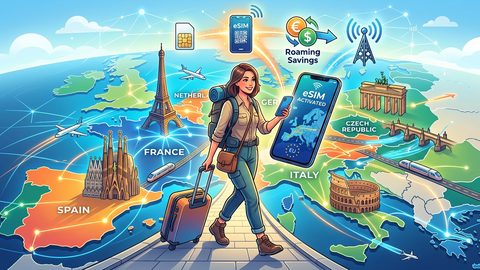 SIM Cards, eSIMs, and Roaming Costs for Schengen Multi-Country Travel
Non-EU visitors face real connectivity costs across Schengen. Compare home roaming, local SIMs, and regional eSIM plans before you pack.
SIM Cards, eSIMs, and Roaming Costs for Schengen Multi-Country Travel
Non-EU visitors face real connectivity costs across Schengen. Compare home roaming, local SIMs, and regional eSIM plans before you pack.
-
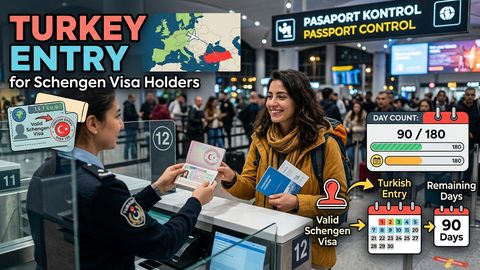 Turkey Entry for Schengen Visa Holders and How the Day Count Works
Learn how exiting Schengen for Turkey affects your 90/180-day count, plus ferry crossing options, Turkish visa requirements, and border documentation.
Turkey Entry for Schengen Visa Holders and How the Day Count Works
Learn how exiting Schengen for Turkey affects your 90/180-day count, plus ferry crossing options, Turkish visa requirements, and border documentation.
-
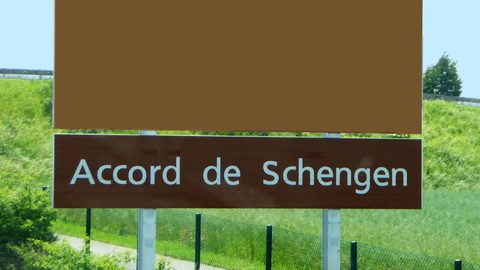 Why the Schengen Agreement Was Signed in a Village of 500 People
The Schengen Agreement was signed in a village of 500 people because it sits at the tripoint where Luxembourg, Germany and France meet, a powerful symbol for border-free travel.
Why the Schengen Agreement Was Signed in a Village of 500 People
The Schengen Agreement was signed in a village of 500 people because it sits at the tripoint where Luxembourg, Germany and France meet, a powerful symbol for border-free travel.
-
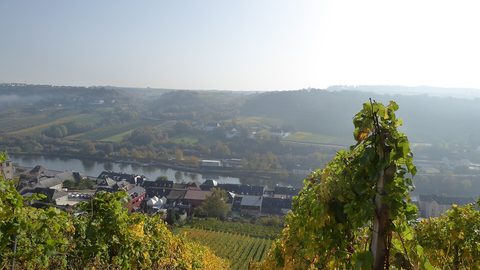 Luxembourg Moselle Wine Route Riesling Crémant and Village Cellars
The Luxembourg Moselle wine route runs through Schengen, where Riesling, Pinot Gris and Crémant de Luxembourg are poured in village cellars with river views.
Luxembourg Moselle Wine Route Riesling Crémant and Village Cellars
The Luxembourg Moselle wine route runs through Schengen, where Riesling, Pinot Gris and Crémant de Luxembourg are poured in village cellars with river views.