Remerschen: The Village Behind the Commune of Schengen
Remerschen is a Moselle wine village of about 765 people, and the commune it sits in was named after it until 2006. Then the council voted to call itself Schengen instead.
- Flag
-

- ISO code
- LU
- Currency
- EUR
- Timezone
- Europe/Luxembourg
The Village That Renamed Itself
Remerschen is a wine village in the south-eastern corner of Luxembourg, close to the point where the Luxembourgish, German and French borders meet. About 765 people live there. Until 2006 it was also the name of the commune: the surrounding administrative district was the commune de Remerschen, and Schengen was one of the villages inside it.
On 18 January 2006 the commune council voted to rename itself Schengen, for the reason anyone would guess - the name recognition belonged to the smaller village down the road, and the commune decided it might as well use it. Remerschen kept its name and lost its billing. In 2011 a law expanded the commune again, absorbing Burmerange and Wellenstein from 1 January 2012; the enlarged commune of Schengen now covers 31.42 square kilometres and about 4,223 people, with Remerschen sitting in the middle of it.
That is the useful thing to know before arriving: Remerschen is the geographic centre of the commune and Schengen is the famous end of it. Signs, bus stops and addresses use both names, and they are not alternatives for the same place.

Wine, and the Moselle Slope Above the Village
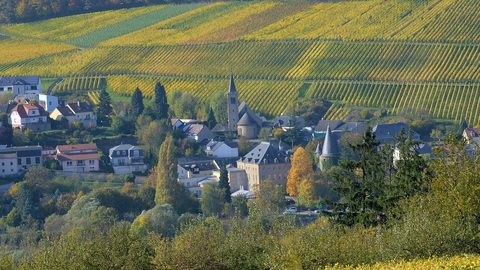
This is Moselle wine country. The slopes behind the village are planted, the climate is mild by Luxembourgish standards, and the route through Remerschen is part of the stretch of the river that produces most of the country's wine. It is working agricultural landscape rather than a preserved one - vineyards, a road, and the river below.
Remerschen is a stop on that route rather than a destination on it. There is no old town to walk, no market square worth crossing the country for. What it has is position: vineyards above, a nature reserve below, and Schengen five minutes down the road.
The Lakes Below the Village
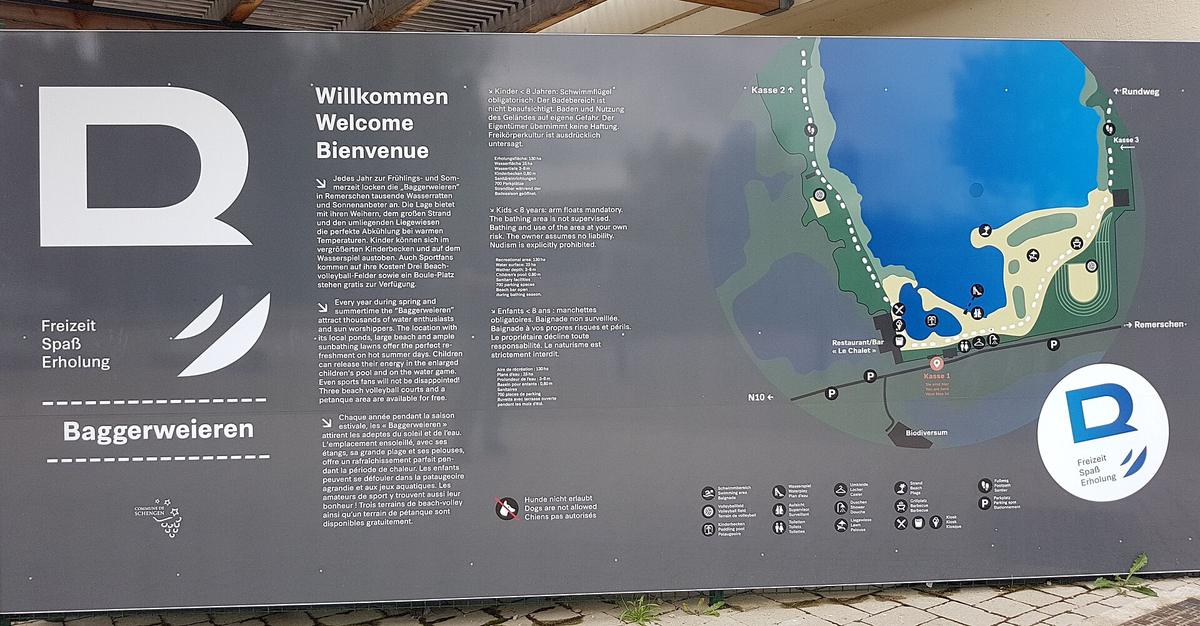
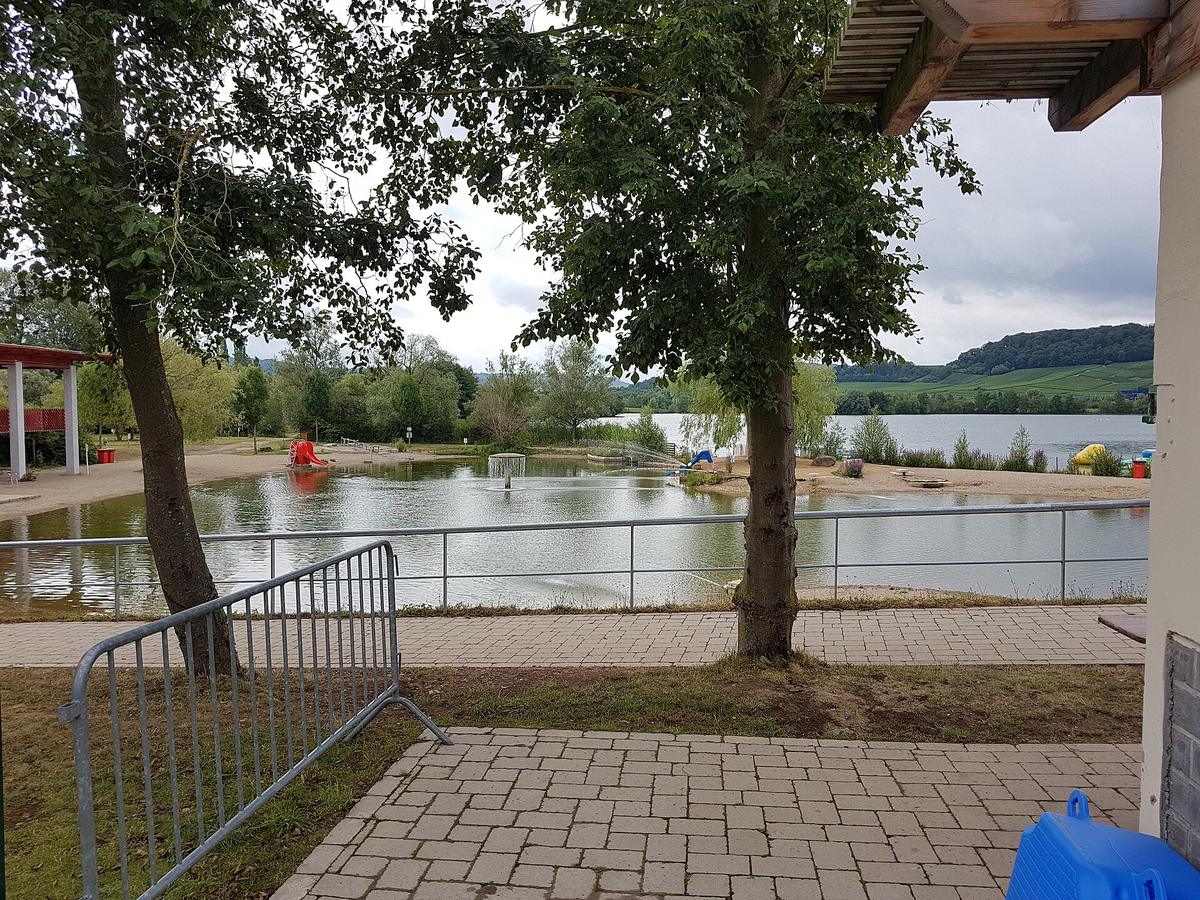
Between Remich and Schengen the valley floor holds the Haff Réimech: about 280 hectares of former gravel pits that filled with water and became Luxembourg's most important wetland, protected as Natura 2000 and listed under the Ramsar convention since 1998. It is the richest place in the country for bird species, and the Biodiversum visitor centre sits at the foot of the vineyards on an artificial island in the middle of it, opened in June 2016.
Swimming, birdwatching, when to come and whether the visitor centre is worth the ticket are covered on their own page: the Remerschen lakes and the Biodiversum. The short version is that this, and not the village, is why most people stop here.

Getting There, and What Else Is Within Reach
Remerschen sits on the road between Remich and Schengen, and public transport in Luxembourg is free, which removes the usual question about whether a bus is worth it. The village is a few minutes from Schengen by road and walkable from it if the weather is reasonable.
Next door is Schengen itself, which is a wine village that happens to have given its name to a treaty, and carries the museum, the castle and the monument that go with that. Germany and France are both within sight across the river.
Come to Remerschen for the reserve and the vineyards. Do not come expecting the village to fill an afternoon on its own: it will fill about twenty minutes, and the lakes below it will fill the rest.
More destinations in Luxembourg
What to See in Remerschen
Common Questions
Is Remerschen the same place as Schengen?
No. They are two villages a few minutes apart in the same commune. The commune was called Remerschen until 2006, when the council renamed it Schengen for the name recognition, so the commune and one of its villages now share a name.
How big is Remerschen?
About 765 people as of 2025. The whole commune of Schengen, which includes Burmerange and Wellenstein since 2012, is around 4,223 people across 31.42 square kilometres.
Why would I go to Remerschen rather than Schengen?
For the Haff Réimech nature reserve and the Biodiversum, which are below the village. Schengen has the museum, the castle and the treaty monument. Most visitors do both - they are minutes apart.
Is there wine to taste in Remerschen?
It is a Moselle wine village with vineyards on the slope above it, on the stretch of river that produces most of Luxembourg's wine. Opening hours for individual producers change, so check before planning a visit around one.
How do I get to Remerschen without a car?
By bus along the Moselle from Remich or Schengen. Public transport in Luxembourg is free, so there is no ticket to work out.
Read next
-
 The Remerschen Lakes
 offer swimming in former gravel pits, rich birdlife and the Biodiversum visitor centre, all ten minutes upriver from Schengen village.
The Remerschen Lakes
The Remerschen Lakes offer swimming in former gravel pits, rich birdlife and the Biodiversum visitor centre, all ten minutes upriver from Schengen village.
-
 Flying to Luxembourg and when a neighbouring airport works better
Luxembourg Airport is convenient but has limited airlines. Sometimes flying into Frankfurt, Brussels, or Paris and taking a train saves hundreds. Compare your options.
Flying to Luxembourg and when a neighbouring airport works better
Luxembourg Airport is convenient but has limited airlines. Sometimes flying into Frankfurt, Brussels, or Paris and taking a train saves hundreds. Compare your options.
-
 Best Time to Visit Luxembourg – Weather, Closures, and Fireworks
May to September brings the best walking weather and terrace-drinking season, but avoid August when many Luxembourg restaurants and shops close for holidays.
Best Time to Visit Luxembourg – Weather, Closures, and Fireworks
May to September brings the best walking weather and terrace-drinking season, but avoid August when many Luxembourg restaurants and shops close for holidays.
-
 Getting Around Luxembourg – Yes, the Buses and Trains Are Actually Free
All buses, trams, and trains in Luxembourg are completely free nationwide with no ticket needed. The catch is weekend frequency on rural routes.
Getting Around Luxembourg – Yes, the Buses and Trains Are Actually Free
All buses, trams, and trains in Luxembourg are completely free nationwide with no ticket needed. The catch is weekend frequency on rural routes.
-
 Luxembourg Prices and Money Tips – Why Lunch Costs More Than You Think
Luxembourg uses the euro and cards are accepted everywhere, but the prices for a simple meal or a round of drinks catch even prepared travellers off guard.
Luxembourg Prices and Money Tips – Why Lunch Costs More Than You Think
Luxembourg uses the euro and cards are accepted everywhere, but the prices for a simple meal or a round of drinks catch even prepared travellers off guard.
-
 Is Luxembourg Safe? The Honest Answer With the Caveats Worth Naming
Luxembourg is exceptionally safe, but the Gare district after dark, unlit valley staircases, and late-night tram encounters are worth knowing about.
Is Luxembourg Safe? The Honest Answer With the Caveats Worth Naming
Luxembourg is exceptionally safe, but the Gare district after dark, unlit valley staircases, and late-night tram encounters are worth knowing about.
-
 Luxembourg trip costs and why free transport does not make it cheap
Free buses and trams do not make Luxembourg cheap. Expect €25-35 lunch mains, €6-8 beers, and hotels rarely under €180. Here is a realistic daily budget breakdown.
Luxembourg trip costs and why free transport does not make it cheap
Free buses and trams do not make Luxembourg cheap. Expect €25-35 lunch mains, €6-8 beers, and hotels rarely under €180. Here is a realistic daily budget breakdown.
-
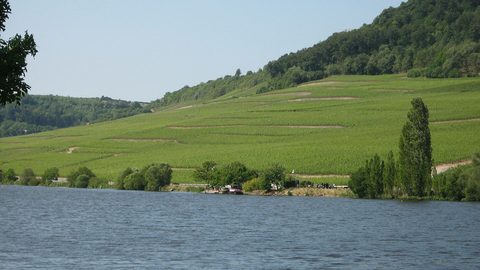 Schengen
 is a quiet wine-growing village stretched along the Moselle, not the busy landmark town most visitors expect. River views, vineyards and one modest museum define the experience.
Schengen
Schengen is a quiet wine-growing village stretched along the Moselle, not the busy landmark town most visitors expect. River views, vineyards and one modest museum define the experience.
-
 Luxembourg Public Holidays – When Everything Shuts and One Day Is Uniquely Local
Luxembourg's public holidays mean full closures, and the Sunday rest rule is taken seriously. One celebration, the Grand Duke's Birthday, is uniquely local.
Luxembourg Public Holidays – When Everything Shuts and One Day Is Uniquely Local
Luxembourg's public holidays mean full closures, and the Sunday rest rule is taken seriously. One celebration, the Grand Duke's Birthday, is uniquely local.