France, the Most Visited Country on Earth, and What That Means for Your Trip
France is the world's most visited country, and that popularity reshapes everything from Louvre queues to rural lunch hours. Here's what to expect.
- Flag
-

- ISO code
- FR
- Population
- 68,000,000
- Currency
- EUR
- Timezone
- Europe/Paris
- Dial code
- +33
France’s Crowds, and How to Move with Them
France draws roughly 90 million visitors a year. Hold onto that number. It determines nearly everything that will frustrate or delight you. The Louvre alone once handled around 10 million people in a year. The Eiffel Tower around 7 million. Versailles around 8 million. You cannot outsmart those crowds by showing up. Plan around them, pay for them, and accept them as part of the experience.
The good news: France has been managing mass tourism longer than any other country. The systems work, provided you respect them. The friction is predictable. Knowing where it lives lets you move with it rather than against it.
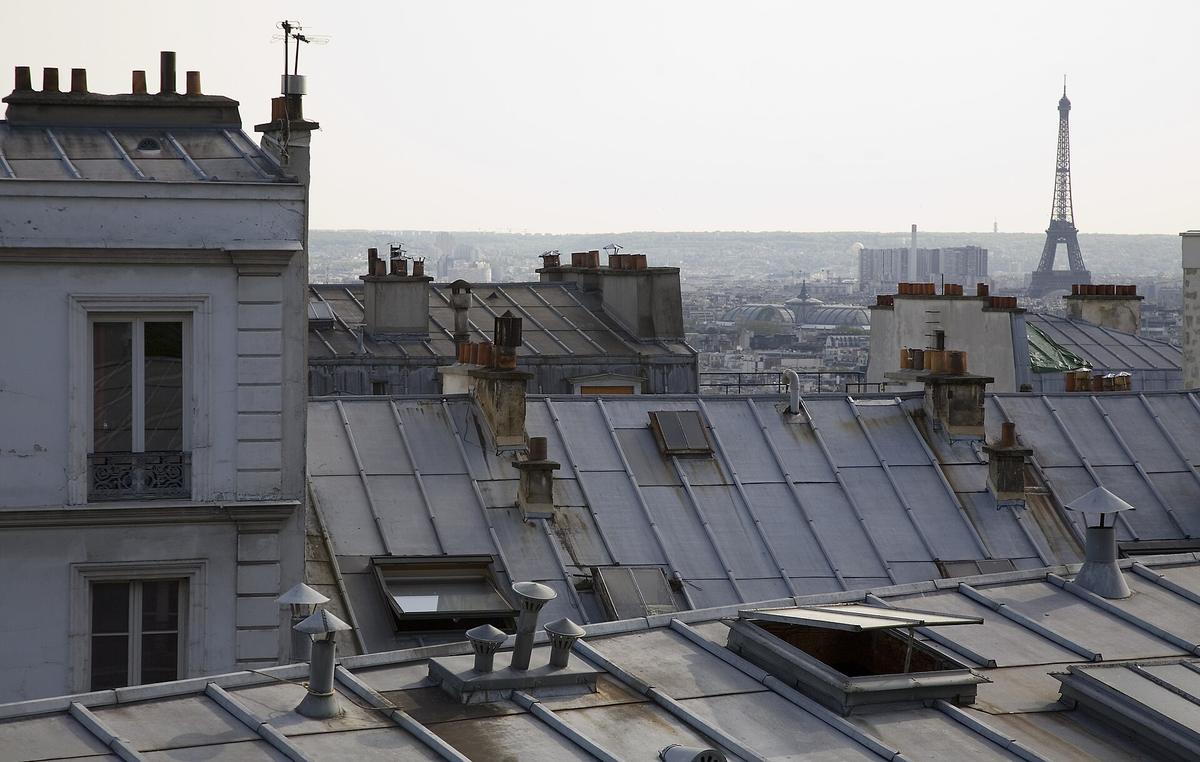

- Best For: Culture and history enthusiasts, food and wine pilgrims, slow-travel lovers, multi-generational families, luxury seekers
- Not For: Travellers needing 24/7 convenience and late-night dining, those on ultra-tight budgets in major cities, and anyone unwilling to learn basic French pleasantries
- Minimum Days: 7 days; anything less forces a single-city sprint and misses the essential rhythm of a market town or countryside pause
- Peak Season: June, August; school holidays across Europe, warmest weather, and major festivals like the Tour de France and Bastille Day (14 July) drive peak pricing and crowds
- Avoid Window: August; the entire country decamps on holiday, overloading coastal areas while many independent shops and restaurants in cities close. Also avoid Paris during major trade fairs like Maison&Objet (January/September) when hotels spike
- Arrival Airports: Paris Charles de Gaulle (CDG): RER B train to central Paris, 35, 50 min, ~€11.80. Paris Orly (ORY): Orlyval light rail + RER B, ~35 min, ~€14.50. Nice Côte d'Azur (NCE): Tram line 2 to city centre, 30 min, ~€1.70. Lyon-Saint Exupéry (LYS): Rhônexpress tram, 30 min, ~€16.70
- Getting Around: The train network (SNCF) is the dominant intercity mode; local buses fill rural gaps. Payment requires chip-and-PIN cards for automated fuel and tolls, and many rural stations have no staffed ticket counters. The biggest trip-up: you must validate paper train tickets in yellow compostage machines before boarding, or face an on-the-spot fine
- Key Distances By TGV: Paris, Lyon: ~2 hours, 465 km. Paris, Marseille: ~3h 15min, 750 km. Paris, Bordeaux: ~2h 10min, 580 km. Paris, Strasbourg: ~1h 45min, 490 km. Paris, Nice: ~5h 30min
- Language Reality: ~39% of the population reports conversational English proficiency (Eurobarometer 2012). Rural levels are low to very low. Learn bonjour, merci, s'il vous plaît, excusez-moi, and l'addition s'il vous plaît before you go.
How Visitor Volume Reshapes Your Day
Ninety million visitors create three concrete pressures: pricing, queues, and reservation requirements. Understand these and the rest of the trip makes sense.
Pricing Is Seasonal, Not Random
Peak season runs June through August. Hotels in Paris, Nice, and the Riviera can double. The worst spike in Paris comes not from summer but from trade fairs like Maison&Objet in January and September. August is its own problem: the entire country goes on holiday. Coastal areas become gridlocked while city restaurants and independent shops shut for weeks. The typical closure period for small businesses in Paris runs from the last two weeks of July to the third week of August. Want empty streets and full menus? Come in May, September, or early October.
Queue Culture Has a Workaround
Every major landmark enforces timed entry. The Louvre requires a mandatory timed slot, released in tranches. Book it. The Eiffel Tower summit tickets release up to 60 days in advance. Book them at 60 days. Versailles requires a timed entry for the palace. Book it. Mont-Saint-Michel requires you to park on the mainland and take a mandatory shuttle bus; no private vehicles reach the mount. The Dune du Pilat, the Cité de Carcassonne, the Aiguille du Midi cable car in Chamonix, Lascaux IV in the Dordogne. Book ahead for all of them. The single exception: the outer walls and free zones of Carcassonne require no ticket. Everything else with a door needs a reservation in peak season.
Reservations Are Not Optional for Dinner Either
Outside Paris, standard lunch service ends by 13:30 to 14:00. Dinner service starts at 19:00 to 19:30. Between those hours, restaurant kitchens are closed. A cold sandwich is your only option. Want bouillabaisse in Marseille? Order it a day ahead. The dish takes hours to prepare and restaurants will not make it on demand. This is not rudeness. It is how kitchens work in a country where the meal is a ritual, not a transaction.
The Formality That Catches Visitors Off Guard
France is formal in ways that can read as cold if you do not know the script. The script is simple: say bonjour when you enter a shop, a bakery, a train carriage, or an elevator. Say merci when you leave. Address strangers as madame or monsieur. Shopkeepers consider it rude if you touch produce without asking. These are not courtesies. They are the entry fee for a civil interaction. Skip them and the service turns frosty. Use them and the same shopkeeper might help you pick the perfect cheese.
Strikes are a fact of life. Trains and flights can cancel with 24 hours' notice. Check SNCF and airline alerts the day before travel. Pack a backup plan. Public toilets are scarce and often require coins; older public ones are squat style. Free Wi-Fi is widespread but often demands a French mobile number for SMS verification. Buy a prepaid eSIM or SIM from a Free or Orange boutique, not the airport, for better rates. Rural areas have significant 4G dead zones, especially in gorges and the Massif Central.
Driving in Paris is punishing. Narrow lanes, aggressive scooters, and the priorité à droite rule (traffic entering from the right has priority unless signed otherwise) catches drivers out constantly. Skip the rental car for Paris. Pick it up at the train station when you leave for the countryside.
| Region | Minimum Days | Best Base Town |
|---|---|---|
| Provence highlights | 3–4 days | Avignon or Aix-en-Provence |
| French Riviera highlights | 3–4 days | Nice |
| Loire Valley châteaux circuit | 2–3 days | Tours or Blois |
| Normandy D-Day beaches and Mont-Saint-Michel | 3–4 days | Caen or Bayeux |
| Alsace wine route | 2–3 days | Strasbourg or Colmar |
| Bordeaux and surrounding vineyards | 3–4 days | Bordeaux |
| Dordogne prehistoric sites and villages | 3–4 days | Sarlat-la-Canéda |
| Lyon and surrounding Beaujolais/Côtes du Rhône | 3 days | Lyon |
How to Build a Trip That Does Not Burn You Out
The most common mistake is trying to cover too much ground. Paris to Nice is a 5 hour 30 minute train ride. A Paris Nice Paris itinerary wastes a full day in transit each way. The same logic applies to every long distance. Do not attempt both the Loire Valley and the French Riviera in one week. You will spend half the trip in stations.
Pick one macro region and one secondary region. Seven days is enough for Paris plus one of the following: Normandy (3 to 4 days for the D-Day beaches and Mont-Saint-Michel), the Loire Valley (2 to 3 days for a châteaux circuit), or Lyon (3 days for food and the Beaujolais wine route). Want the south? Spend 7 days in Provence and the Riviera combined. Anything more ambitious needs 10 to 14 days.
The pace outside cities is slower than you expect. Rural France does not do fast. Markets open at 8:00 and close by 13:00. Shops shut for two hours at lunch. The afternoon is for a long meal, a walk, or nothing at all. This is not inefficiency. It is the rhythm that makes the place worth visiting. Lean into it. The visitor who tries to force a fast itinerary onto a slow country will leave frustrated. The visitor who adapts will leave planning the return trip.
Common Questions
How far ahead should I book the Eiffel Tower?
Summit tickets are released up to 60 days in advance. Book at exactly 60 days for the best time slots. If you wait until the week before, you will likely only find second-floor tickets or nothing at all.
Do I really need a timed ticket for the Louvre?
Yes. Timed entry is mandatory. Tickets are released in tranches. Book your slot before you book your flight. The museum handled roughly 10 million visitors in a pre-2020 year; the system is designed to manage that volume, not to accommodate walk-ups.
What happens if I do not validate my train ticket?
You face an on-the-spot fine. Look for the yellow compostage machines on the platform before you board. Insert your paper ticket, wait for the stamp, and keep it with you for the inspector. Digital tickets on the SNCF app are validated automatically when you buy them.
Can I drive up to Mont-Saint-Michel?
No. Private vehicles are not allowed on the mount. You must park on the mainland and take the mandatory shuttle bus. Book parking in advance during peak season.
Is August really that bad?
Yes. Many independent shops and restaurants in cities close for the month. The typical closure period in Paris runs from the last two weeks of July to the third week of August. Coastal areas become overcrowded. If you can travel in May, June, September, or October, do.
Do I need to speak French?
You need basic pleasantries. Bonjour, merci, s'il vous plaît, excusez-moi, and l'addition s'il vous plaît for the bill. Roughly 39% of the population reports conversational English, and that percentage drops significantly in rural areas. A French greeting is the key that unlocks polite service.
Can I eat dinner at 21:00 in a small town?
Probably not. Outside Paris, dinner service starts at 19:00 to 19:30. Kitchens close firmly. If you arrive at 21:00, you will eat a sandwich from the grocery store or nothing at all.
Read next
-
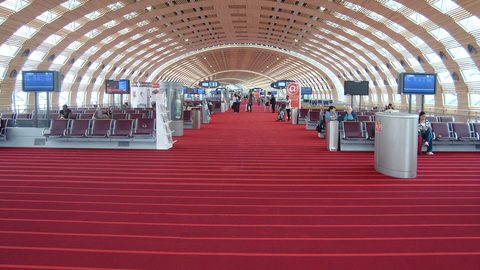 Which Paris Airport to Choose and When to Fly Into a French Region Instead
How to decide between Paris CDG, Orly, or a regional French airport based on your itinerary, train connections, and total door-to-door time.
Which Paris Airport to Choose and When to Fly Into a French Region Instead
How to decide between Paris CDG, Orly, or a regional French airport based on your itinerary, train connections, and total door-to-door time.
-
 Best Time to Visit France and Why August Is the Real Trap
August looks perfect on paper but France's domestic holiday exodus closes city shops and overloads the coast. Here's when to go instead.
Best Time to Visit France and Why August Is the Real Trap
August looks perfect on paper but France's domestic holiday exodus closes city shops and overloads the coast. Here's when to go instead.
-
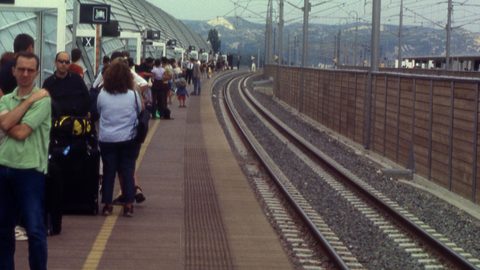 SNCF Train Booking and What a French Strike Actually Does to Your Trip
French train travel means navigating TGV and TER bookings, validating paper tickets, and surviving strikes. Here's the full system.
SNCF Train Booking and What a French Strike Actually Does to Your Trip
French train travel means navigating TGV and TER bookings, validating paper tickets, and surviving strikes. Here's the full system.
-
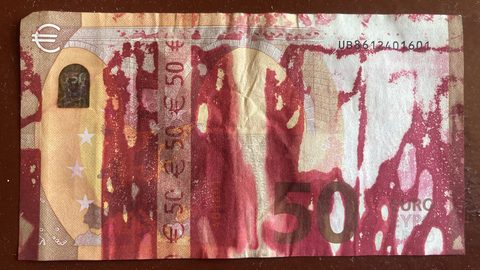 Tipping in France and Why Most Online Advice Gets It Wrong
Service is included on French restaurant bills, and most tipping advice online is wrong. Here's what locals actually expect, plus card rules.
Tipping in France and Why Most Online Advice Gets It Wrong
Service is included on French restaurant bills, and most tipping advice online is wrong. Here's what locals actually expect, plus card rules.
-
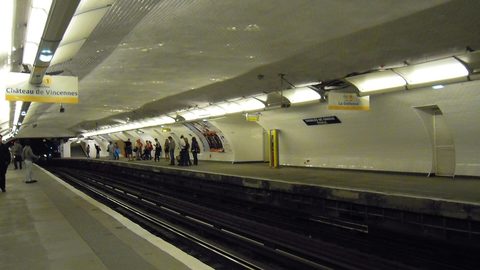 France Safety Guide Where Pickpocketing Is the Real and Concentrated Risk
Violent crime against tourists in France is rare, but pickpocketing is concentrated on the CDG RER B, Louvre queues, and Gare du Nord.
France Safety Guide Where Pickpocketing Is the Real and Concentrated Risk
Violent crime against tourists in France is rare, but pickpocketing is concentrated on the CDG RER B, Louvre queues, and Gare du Nord.
-
 What a Day in France Costs and the Lunch Menu Trick That Halves It
A realistic daily budget for France, plus the fixed-price lunch menu strategy that cuts food costs in half while letting you eat better.
What a Day in France Costs and the Lunch Menu Trick That Halves It
A realistic daily budget for France, plus the fixed-price lunch menu strategy that cuts food costs in half while letting you eat better.
-
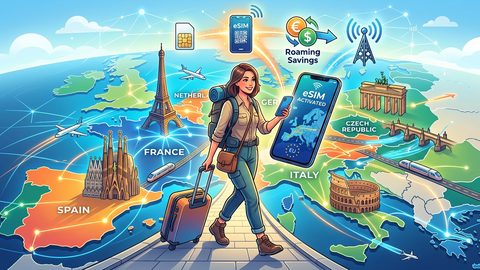 SIM Cards, eSIMs, and Roaming Costs for Schengen Multi-Country Travel
Non-EU visitors face real connectivity costs across Schengen. Compare home roaming, local SIMs, and regional eSIM plans before you pack.
SIM Cards, eSIMs, and Roaming Costs for Schengen Multi-Country Travel
Non-EU visitors face real connectivity costs across Schengen. Compare home roaming, local SIMs, and regional eSIM plans before you pack.
-
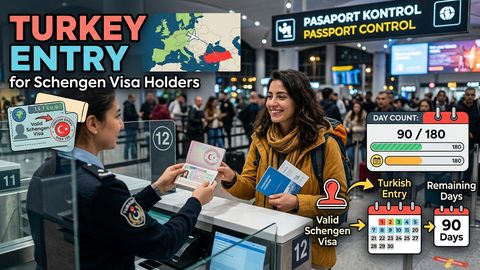 Turkey Entry for Schengen Visa Holders and How the Day Count Works
Learn how exiting Schengen for Turkey affects your 90/180-day count, plus ferry crossing options, Turkish visa requirements, and border documentation.
Turkey Entry for Schengen Visa Holders and How the Day Count Works
Learn how exiting Schengen for Turkey affects your 90/180-day count, plus ferry crossing options, Turkish visa requirements, and border documentation.
-
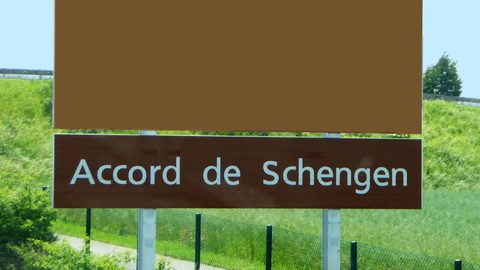 Why the Schengen Agreement Was Signed in a Village of 500 People
The Schengen Agreement was signed in a village of 500 people because it sits at the tripoint where Luxembourg, Germany and France meet, a powerful symbol for border-free travel.
Why the Schengen Agreement Was Signed in a Village of 500 People
The Schengen Agreement was signed in a village of 500 people because it sits at the tripoint where Luxembourg, Germany and France meet, a powerful symbol for border-free travel.