Turkey Entry for Schengen Visa Holders and How the Day Count Works
Learn how exiting Schengen for Turkey affects your 90/180-day count, plus ferry crossing options, Turkish visa requirements, and border documentation.
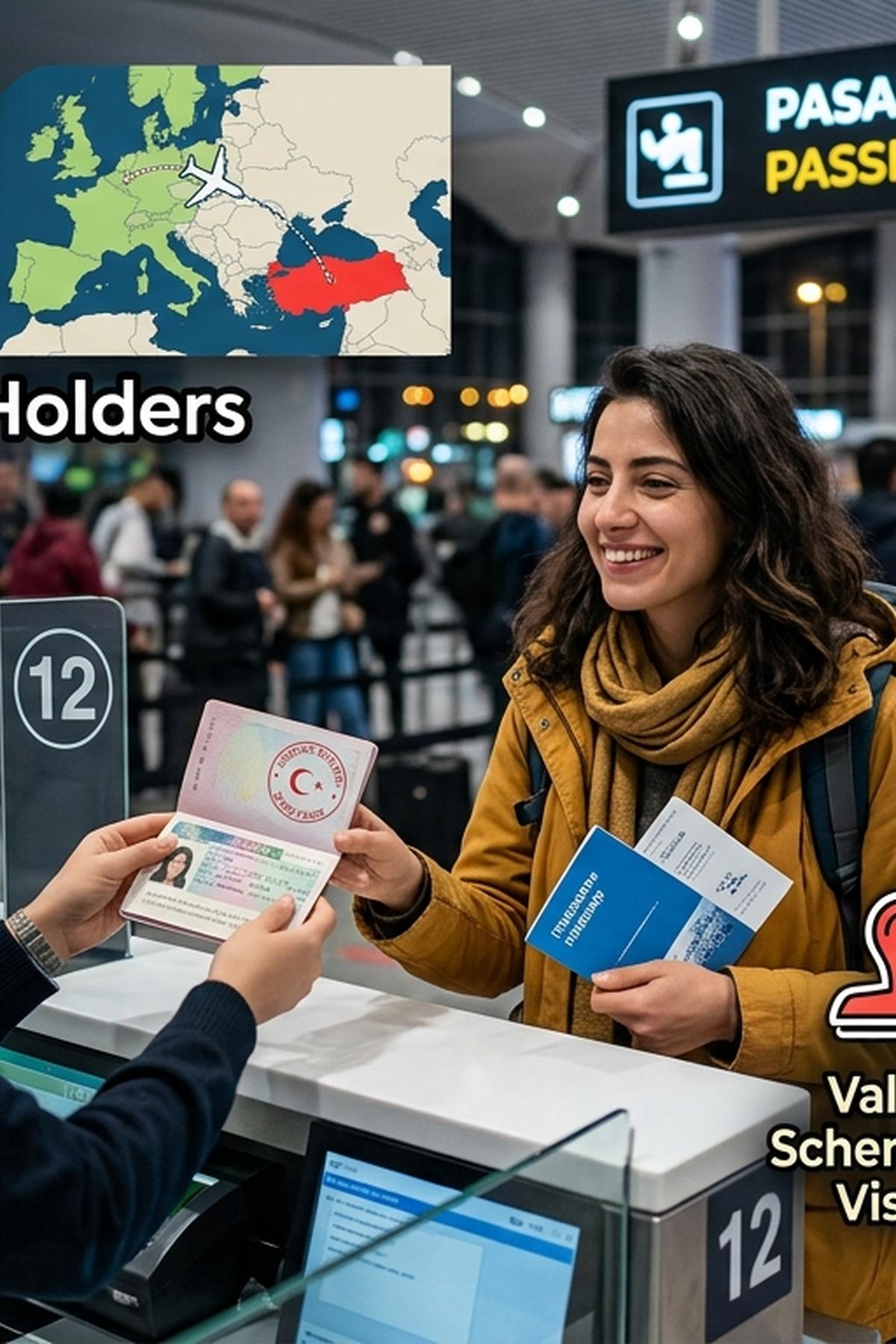
You have used 60 days of your Schengen allowance. Three weeks remain on your clock. You want more time in Europe, but that number will not stretch. Turkey sits just across the Aegean from the Greek islands, and a few weeks there can give you exactly the breathing room you need. Before you buy that ferry ticket, you need to understand what counts, what does not, and what documentation follows you through each border.
Schengen and Turkey: Fast Facts
- Turkey is not part of the Schengen Area. Days there do not count toward your 90-day limit.
- Exiting Schengen for Turkey pauses your day count without consuming any of it.
- Turkey has its own entry system. Most nationalities need a Turkish e-Visa or visa on arrival, applied for independently.
- Ferry crossings from Greek islands are the most direct sea route from Schengen into Turkey.
- Re-entering Schengen restarts your count from where you left it. Turkey does not reset the 180-day window.
Turkey Sits Entirely Outside the Schengen Zone
Turkey is not a Schengen member. It has never been part of the agreement and does not participate in the shared border zone. The moment you step off a ferry in Kusadasi or land at Istanbul Airport, you have crossed into a completely separate immigration system.
The Schengen Area currently includes 29 European countries, all sharing a common external border and a unified short-stay framework. Turkey borders Greece and Bulgaria, both Schengen members, but Turkey itself sits outside. That geographic closeness is exactly what makes it useful for travelers managing their day-count.
Your days in Turkey are completely invisible to the Schengen count. A border officer at Athens airport will not include your two weeks in Istanbul when calculating your available Schengen days. The two systems run in parallel, not together.
How the 90/180-Day Rule Actually Counts Your Time
The rule has a precise mechanism. You may spend at most 90 days inside Schengen within any rolling 180-day window. That window does not reset at the start of a calendar year. It rolls backward from the current date, every single day.
The practical consequence is that border officers do not just count from January 1. They look at your passport and calculate the 180 days immediately before your entry date. Every Schengen day in that window counts against your 90-day limit.
Article 6 of the Schengen Borders Code is the regulation that establishes this framework. It defines exactly how the calculation works and applies to all third-country nationals entering on short-stay terms, whether on a visa or visa-free.
To find your remaining days: count backward 180 days from today, add up every day spent inside Schengen in that window, and subtract from 90. The result is what you have left.
What a Turkey Trip Does to Your Running Schengen Total
The arithmetic is straightforward. Say you have used 60 of your 90 days. You have 30 remaining. You leave Schengen for Turkey and spend 18 days in Istanbul and along the coast. During those 18 days, the Schengen count does not move. Turkey days do not register.
When you return to a Schengen entry point, you still have 30 days remaining. Nothing changed while you were in Turkey, because Turkey is not part of the count.
One thing travelers sometimes misunderstand: Turkey does not reset the 180-day window. Your prior Schengen days stay on your record. If you had 60 days logged before leaving, they are still logged when you return. Turkey paused the clock. It did not clear the history.
This distinction matters if you are hoping to extend a long stay in Europe. Turkey gives you extra calendar time for your trip. It does not give you extra Schengen days beyond your 90-day allocation.
Getting from Schengen to Turkey: Ferry Routes and Flights
There are two practical ways to cross from Schengen into Turkey: by ferry from the Greek islands, or by air from any Schengen airport.
The Greek island ferry routes are the most popular among travelers already in southern Europe. Several Aegean islands have regular or seasonal services to nearby Turkish ports. Frequencies vary by route and season, with summer months offering the most options.
- Samos to Kusadasi: year-round service, journey around 90 minutes
- Chios to Cesme: year-round, approximately 45 minutes by fast ferry
- Rhodes to Bodrum: seasonal service, roughly 1 to 2 hours
- Kos to Bodrum: seasonal, approximately 30 minutes on fast vessels
- Lesbos to Dikili or Ayvalik: less frequent, check current schedules before planning
Ferry and Flight Crossings from Schengen to Turkey
| Route | Type | Approx. Duration | Availability |
|---|---|---|---|
| Samos to Kusadasi | Ferry | ~90 min | Year-round |
| Chios to Cesme | Ferry | ~45 min | Year-round |
| Kos to Bodrum | Ferry | ~30 min | Apr to Oct |
| Rhodes to Bodrum | Ferry | 1 to 2 hours | Apr to Oct |
| Schengen hub to Istanbul | Flight | 3 to 4 hours | Year-round |
Flights from major Schengen hubs into Istanbul Airport (IST) or Sabiha Gokcen (SAW) run year-round. Frankfurt, Amsterdam, Paris, Vienna, and Rome all have direct services. Budget carriers and full-service airlines both cover these routes. For travelers not near the Greek islands, flying is usually the faster and more predictable option.
Turkish Entry: What You Need Before You Board
Turkey runs its entry system entirely independently of Schengen. A Schengen visa grants no rights inside Turkish borders. Before you travel, you need to confirm what your specific passport requires.
Most nationalities can apply for a Turkish e-Visa online in advance, or obtain a visa on arrival at the port of entry. Some nationalities enter visa-free. A small number must visit a Turkish consulate before departure. The categories are precise and passport-dependent. Checking Turkey visa rules for your nationality before booking is the right call, not something to sort out at the dock.
The Turkish e-Visa application takes only a few minutes for eligible nationalities. You apply online, receive confirmation by email, and carry that confirmation to the border. Processing is usually fast, but apply a few days before travel to avoid any delay.
Some ferry operators on Greek island routes will check that you have a valid Turkish visa or can confirm eligibility before allowing boarding. Do not leave this to chance on the day of travel.
What Border Officers Check When You Leave Schengen
Exiting Schengen through a Greek island port or an international airport triggers a passport check. The officer records your departure. That exit stamp becomes part of your Schengen day-count record and is as important as your entry stamp.
Missing or unclear stamps can cause problems on re-entry, especially if you are close to your 90-day limit. Clean documentation at exit makes the return process faster and less complicated.
Have these ready and accessible at Schengen exit:
- Your passport with all prior entry and exit stamps visible
- Your Schengen visa, if applicable, showing validity and the number of permitted entries
- Proof of onward travel to Turkey, such as a confirmed ferry booking or flight ticket
- Your Turkish e-Visa confirmation, or documentation showing you qualify for visa on arrival
Re-entering Schengen After Turkey: The Day Count Picks Back Up
Your return to Schengen works just like any other entry. The border officer reviews your passport, checks the rolling 180-day window, calculates your prior Schengen days, and determines how many you have left.
This is where clean documentation pays off. If your stamps are clear and your record is straightforward, the process is fast. If there are gaps or stamps that are hard to account for, questions follow.
Border officers are also trained to spot patterns. Travelers who exit Schengen repeatedly and return immediately after 90 days can draw attention if it appears they are maintaining continuous European residence under short-stay terms. A single well-planned Turkey segment as part of a genuine trip raises no flags. A recurring pattern of back-to-back 90-day blocks with minimal time outside Schengen is a different picture altogether.
Fitting Turkey Into Your Schengen Arithmetic
Turkey works as a travel segment for one precise reason: it is close, independently governed, and costs you zero Schengen days. That combination is genuinely useful for independent travelers who want more calendar time in Europe than 90 consecutive days allows.
The approach is clean. Track your Schengen days carefully. Know your exact remaining allowance before you leave. Sort your Turkish entry requirements in advance based on your passport. Cross into Turkey, spend your time there, and return to Schengen with your remaining days intact.
Keep your passport stamps clear, your visa documentation organized, and your itinerary coherent at every border. The 90/180 rule is strict, but it is also mechanical. If you understand the calculation and plan your movements accordingly, Turkey fits naturally into a longer European trip, not as a workaround, but as a legitimate destination that happens to fall outside the zone.
Read next
-
 SIM Cards, eSIMs, and Roaming Costs for Schengen Multi-Country Travel
Non-EU visitors face real connectivity costs across Schengen. Compare home roaming, local SIMs, and regional eSIM plans before you pack.
SIM Cards, eSIMs, and Roaming Costs for Schengen Multi-Country Travel
Non-EU visitors face real connectivity costs across Schengen. Compare home roaming, local SIMs, and regional eSIM plans before you pack.
-
 Why the Schengen Agreement Was Signed in a Village of 500 People
The Schengen Agreement was signed in a village of 500 people because it sits at the tripoint where Luxembourg, Germany and France meet, a powerful symbol for border-free travel.
Why the Schengen Agreement Was Signed in a Village of 500 People
The Schengen Agreement was signed in a village of 500 people because it sits at the tripoint where Luxembourg, Germany and France meet, a powerful symbol for border-free travel.
-
 Luxembourg Moselle Wine Route Riesling Crémant and Village Cellars
The Luxembourg Moselle wine route runs through Schengen, where Riesling, Pinot Gris and Crémant de Luxembourg are poured in village cellars with river views.
Luxembourg Moselle Wine Route Riesling Crémant and Village Cellars
The Luxembourg Moselle wine route runs through Schengen, where Riesling, Pinot Gris and Crémant de Luxembourg are poured in village cellars with river views.