Which Countries Are in the Schengen Area, and Which Are Not
Which countries are in the Schengen Area, the ones people get wrong, and the difference between Schengen and EU membership.

The Schengen Area is Not the European Union
Most travellers assume every EU country is in the borderless Schengen Area. That is wrong. And the reverse is also wrong: four non-EU nations are full Schengen members. You can cross from France into Switzerland without showing a travel document, but you cannot cross from France into Ireland without one, even though both are in the EU. The Schengen Area contains 29 member states: 25 EU members plus Switzerland, Norway, Iceland, and Liechtenstein. Two EU members, Ireland and Cyprus, remain outside the zone. Bulgaria and Romania only joined fully on 1 January 2025, after years of partial membership. Know exactly which nations are inside the borderless zone. A mistake costs you a visa violation or a wasted border crossing at 1 am.
The 29 Full Schengen Area Member States
Here is the complete member list. 29 nations. Memorise the edges.
- Austria, Belgium, Bulgaria, Croatia, Czech Republic, Denmark, Estonia, Finland, France, Germany, Greece, Hungary, Iceland, Italy, Latvia, Liechtenstein, Lithuania, Luxembourg, Malta, Netherlands, Norway, Poland, Portugal, Romania, Slovakia, Slovenia, Spain, Sweden, Switzerland.
Bulgaria and Romania became full members on 1 January 2025. Their air and sea borders joined on 31 March 2024. Land border checks were removed on 1 January 2025. Croatia joined on 1 January 2023, with air and sea borders following on 26 March 2023. These three were the last to integrate fully. No other nation is expected to join in the next two years.
The Four Non-EU Members
Switzerland, Norway, Iceland, and Liechtenstein are in the Schengen Area but not in the European Union. Switzerland associated on 12 December 2008. Norway and Iceland joined on 25 March 2001. Liechtenstein came in on 19 December 2011. A Schengen visa gets you into all four. What it does not get you is free roaming on your mobile phone SIM. The EU "roam like at home" rule does not apply in Switzerland or Norway. Your French or German SIM will incur extra charges the moment you cross into Bern or Oslo. Budget for a separate eSIM or a local prepaid card.
The Countries Travellers Routinely Get Wrong
Confusion causes travellers to overstay visas, miss connecting trains, or book flights to the wrong jurisdiction. Here are the traps.
Ireland: An EU Member Outside Schengen
Ireland is in the European Union. It is not in the Schengen Area. It maintains its own Common Travel Area with the United Kingdom. You clear passport control when flying from Paris to Dublin. You clear it again when flying from Dublin to Berlin. A Schengen visa does not cover Ireland. You need a separate Irish visa unless you hold a passport from a visa-waiver nation. The same applies to the United Kingdom, which left the EU entirely. Both are common origin or destination points for multi-country itineraries, and both eat up an extra hour at border control if you have not checked your visa status.
Cyprus: Pending, Not In
Cyprus is an EU member state. It is not a Schengen member. Its accession is pending a completed evaluation. You pass through passport control when arriving from Greece or any other Schengen nation. Do not assume a Schengen visa lets you into Nicosia. It does not. The same logic applies to four European microstates with open borders but no formal membership: Monaco, San Marino, Vatican City, and Andorra. You walk into Monaco from France without a check. Andorra, which sits between France and Spain, can impose border checks. None of these microstates issue Schengen visas. Your entry is contingent on being legally present in the neighbouring Schengen nation.
Overseas Territories: Not In The Zone
France, the Netherlands, Denmark, Norway, Spain, and Portugal all have territories outside Europe that are not part of the Schengen Area. French Guiana, Guadeloupe, Martinique, Mayotte, Réunion, Saint Martin, French Polynesia, New Caledonia, Wallis and Futuna, Saint Barthélemy, and Saint Pierre and Miquelon require separate entry clearance. The same goes for Aruba, Curaçao, Sint Maarten, Bonaire, Sint Eustatius, and Saba (Caribbean Netherlands). Plus Greenland and the Faroe Islands (Denmark), Svalbard and Jan Mayen (Norway), Ceuta and Melilla (Spain), and the Azores and Madeira (Portugal). A Schengen visa does not cover these places. Check the entry rules for each territory before booking.

| Category | Number | List |
|---|---|---|
| Total Schengen member states | 29 | Austria, Belgium, Bulgaria, Croatia, Czech Republic, Denmark, Estonia, Finland, France, Germany, Greece, Hungary, Iceland, Italy, Latvia, Liechtenstein, Lithuania, Luxembourg, Malta, Netherlands, Norway, Poland, Portugal, Romania, Slovakia, Slovenia, Spain, Sweden, Switzerland |
| EU members in Schengen | 25 | All EU members except Ireland and Cyprus |
| Non-EU members in Schengen | 4 | Switzerland, Norway, Iceland, Liechtenstein |
| EU members not in Schengen | 2 | Ireland, Cyprus |
What Being in the Schengen Area Actually Means for Your Trip
The borderless zone means no passport checks at internal land borders. Board a train in Paris and step off in Milan six hours later without showing a document. That is the theory. The practical reality includes random police checks, sudden rail strikes in a nation where you do not speak the language, and quiet Sundays in smaller towns where everything is closed. Juggling multiple currencies (euro, zloty, koruna, forint), languages, and cultural norms is harder than the logistics of crossing the borders themselves.
Multi-country rail trippers and slow travellers with open-ended itineraries benefit most. Budget for at least 14 days. Less than that and you end up in a logistical sprint between two or three cities, spending more time on trains than experiencing them. Peak season runs June to August. Crowds and prices hit their maximum in Mediterranean cities. Avoid August in Paris, Rome, and Barcelona unless you are comfortable with 35°C heat. Avoid Venice during Carnevale and Munich during Oktoberfest unless you booked accommodation a year ahead.
Arrival Hubs and Getting Around
Amsterdam Schiphol: direct train to Centraal Station in 15-20 minutes for roughly 6 euro. Paris Charles de Gaulle: RER B to central Paris in 35-50 minutes for roughly 11 euro. Frankfurt: S-Bahn to Hauptbahnhof in 15 minutes for roughly 5 euro. Madrid Barajas: Metro Line 8 to Nuevos Ministerios in 15-20 minutes for roughly 5 euro. Getting around relies on high-speed and regional rail, supplemented by budget airlines for longer leaps. Carry a contactless bank card for most urban transit. Rural buses in Germany and Austria still demand cash. The most common mistake: failing to validate a paper ticket in a stamping machine before boarding a regional train in Italy or France. That gets you a fine even with a valid purchase.
One Rule That Catches Every Long-Term Traveller
A single Schengen visa or entry stamp does not allow indefinite stay. The 90/180-day rule caps your presence to 90 days in any 180-day window across the entire zone. Leaving for a weekend in London does not reset the clock. Overstaying can lead to a ban. Track your days with a calendar or the official EU calculator. Do that now, before you book anything else.
Read next
-
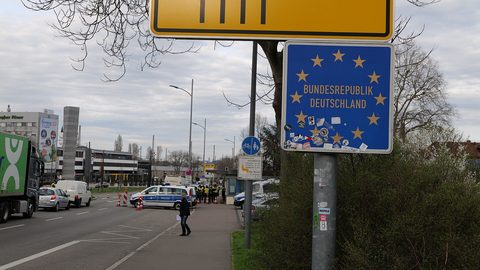 Schengen Border Checks and When Invisible Borders Return
The borders that are supposed to be invisible, and when temporary checks, police stops, and document demands return.
Schengen Border Checks and When Invisible Borders Return
The borders that are supposed to be invisible, and when temporary checks, police stops, and document demands return.
-
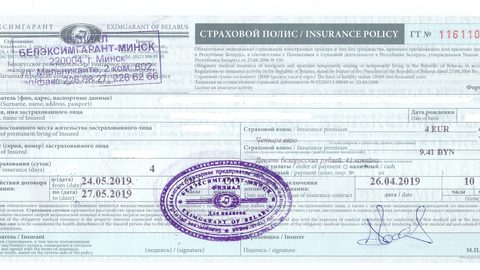 Schengen Travel Insurance Rules for Visas and Smart Trips
A hard requirement for Schengen visa applicants, and a good idea for everyone else crossing multiple borders.
Schengen Travel Insurance Rules for Visas and Smart Trips
A hard requirement for Schengen visa applicants, and a good idea for everyone else crossing multiple borders.
-
 Overstaying the Schengen 90-Day Rule and What Happens Next
What actually happens when you overstay the Schengen 90/180-day limit, from fines to entry bans and future visa trouble.
Overstaying the Schengen 90-Day Rule and What Happens Next
What actually happens when you overstay the Schengen 90/180-day limit, from fines to entry bans and future visa trouble.
-
 Extending a Schengen Stay Beyond 90 Days and What Actually Works
Extending a Schengen stay beyond 90 days is almost never possible. Here are the bilateral agreements and national visa routes that actually work.
Extending a Schengen Stay Beyond 90 Days and What Actually Works
Extending a Schengen stay beyond 90 days is almost never possible. Here are the bilateral agreements and national visa routes that actually work.
-
 Planning a First Multi-Country Schengen Trip Without Burning Out
Planning a first multi-country Schengen trip starts with picking one region and three bases, not a dozen cities. Here is the order to plan in.
Planning a First Multi-Country Schengen Trip Without Burning Out
Planning a first multi-country Schengen trip starts with picking one region and three bases, not a dozen cities. Here is the order to plan in.
-
 The Schengen 90-Day Rule Without the Confusion
The single most misunderstood rule in European travel, explained with a rolling-window example and no legal jargon.
The Schengen 90-Day Rule Without the Confusion
The single most misunderstood rule in European travel, explained with a rolling-window example and no legal jargon.
-
 SIM Cards, eSIMs, and Roaming Costs for Schengen Multi-Country Travel
Non-EU visitors face real connectivity costs across Schengen. Compare home roaming, local SIMs, and regional eSIM plans before you pack.
SIM Cards, eSIMs, and Roaming Costs for Schengen Multi-Country Travel
Non-EU visitors face real connectivity costs across Schengen. Compare home roaming, local SIMs, and regional eSIM plans before you pack.
-
 Turkey Entry for Schengen Visa Holders and How the Day Count Works
Learn how exiting Schengen for Turkey affects your 90/180-day count, plus ferry crossing options, Turkish visa requirements, and border documentation.
Turkey Entry for Schengen Visa Holders and How the Day Count Works
Learn how exiting Schengen for Turkey affects your 90/180-day count, plus ferry crossing options, Turkish visa requirements, and border documentation.
-
 Why the Schengen Agreement Was Signed in a Village of 500 People
The Schengen Agreement was signed in a village of 500 people because it sits at the tripoint where Luxembourg, Germany and France meet, a powerful symbol for border-free travel.
Why the Schengen Agreement Was Signed in a Village of 500 People
The Schengen Agreement was signed in a village of 500 people because it sits at the tripoint where Luxembourg, Germany and France meet, a powerful symbol for border-free travel.