Temporary Schengen Border Checks and What Changes for Rail Trips
A practical guide to Temporary Schengen Border Checks and What Changes for Rail Trips.

Which rail routes are affected right now
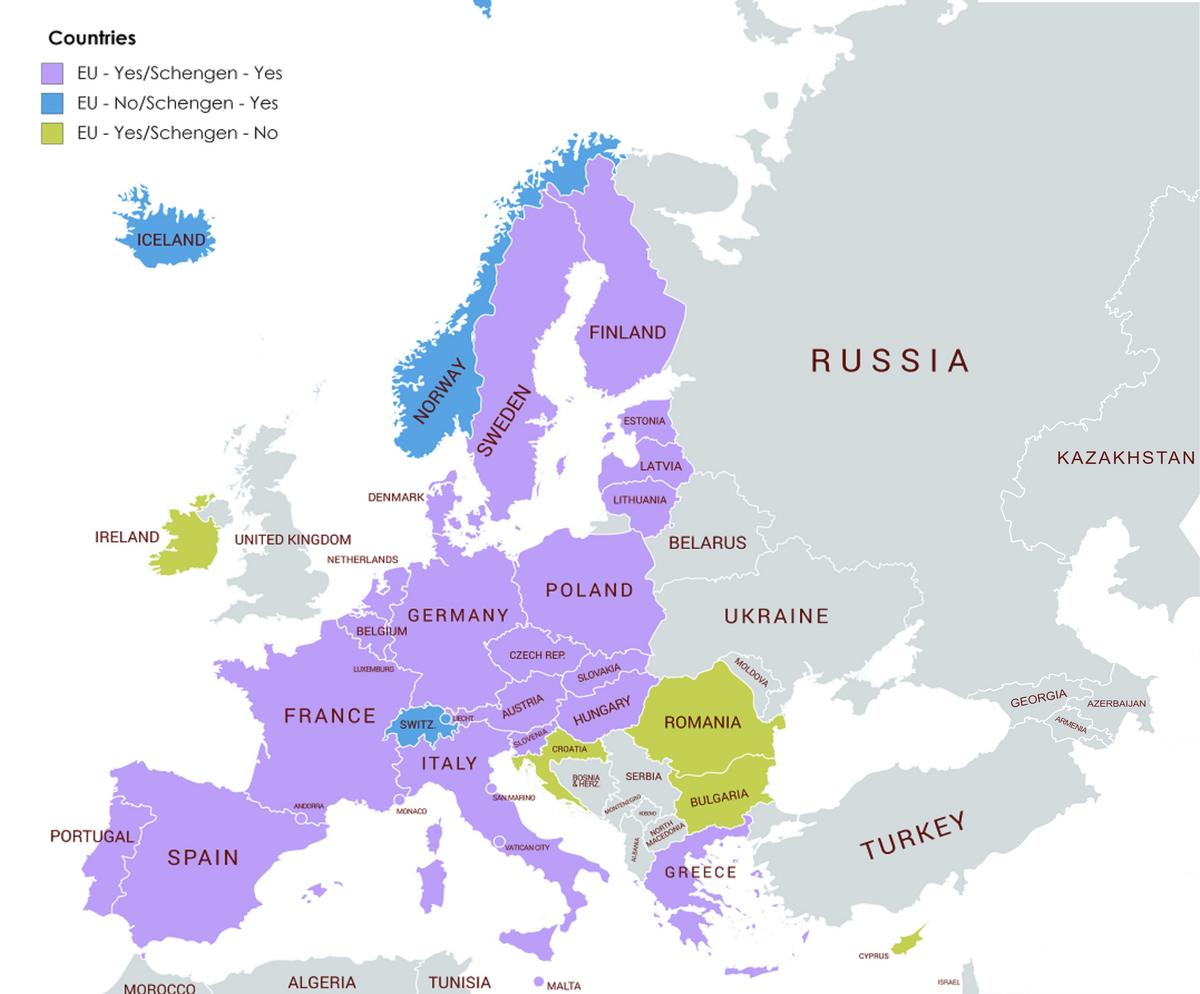
As of early November 2026, Germany is the focal point for rail passengers crossing internal Schengen borders. The Federal Ministry of the Interior has ordered passport inspections on all international long-distance trains entering the country. This covers ICE, EC, ECE, IC, RJ, TGV and Nightjet services. The checks apply across every land border Germany shares, from the Netherlands and Belgium in the west to Poland and the Czech Republic in the east, and from Denmark in the north to Austria and Switzerland in the south.
France and Austria also maintain active internal border controls that affect rail travel. France has notified checks at all its internal borders, including those with Germany, Luxembourg, Switzerland, Spain and Italy. Austria is conducting controls on its land borders with Slovakia, the Czech Republic, Hungary and Slovenia. Poland has extended checks on its land borders with Germany and Lithuania, which means passengers on routes such as Berlin to Warsaw may encounter document inspections.
Denmark and Sweden both have controls in place. Denmark conducts spot checks at its land and sea borders with Germany, and maintains a long-standing control regime at its border with Sweden. Sweden checks passengers at all internal borders, and on the Øresundståg trains from Denmark, the Swedish Police usually conduct inspections at Hyllie station, the first stop after the crossing.
What actually happens during a train border check
These are document-only inspections. Officers will ask to see a passport or national identity card. No biometric data is captured, and the process is entirely separate from the EU Entry/Exit System, which operates only at external Schengen borders. The checks are typically risk-based spot checks rather than systematic screenings of every passenger on every service. National authorities decide where and when to deploy officers on any given day.
On most international long-distance trains entering Germany, the inspection happens while the train is moving between border stops. Deutsche Bahn states that this does not affect train operations. The train keeps rolling, and passengers simply remain in their seats and present documents when asked.
There are two German border stations where the procedure differs. At Frankfurt (Oder) and Kehl, passport inspections are carried out in the station during the scheduled stop. This can cause delays of approximately 5 to 15 minutes. On night trains entering Germany, border controls are always conducted while the train stops at the nearest border station. The good news is that these inspection times are already accounted for in the published timetable, so you should not face unexpected late-night delays beyond what the schedule shows.

What to carry and how to prepare
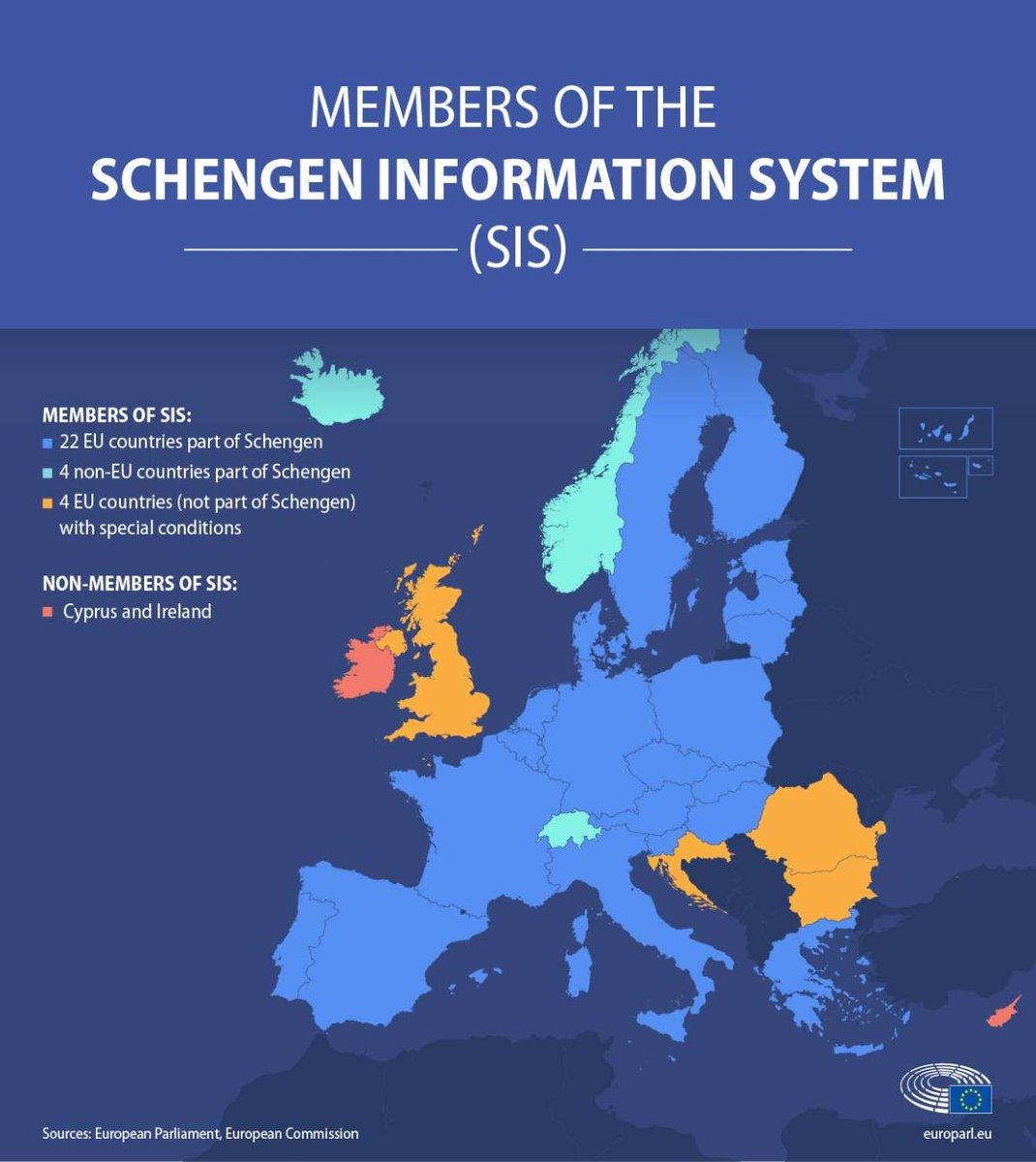
Deutsche Bahn advises all passengers entering Germany to have a passport or identity card ready upon boarding. You should stay on the train during inspections. There is no need to queue at a door or disembark unless specifically instructed by an officer. The operator also recommends checking journey information on bahn.de or in the DB Navigator app for up-to-date border control details before you travel.
A practical recommendation is to keep your travel document in an easily accessible pocket or bag compartment rather than buried in luggage stored overhead or at the end of the carriage. On a moving train, retrieving a passport from a suitcase in a rack can be awkward and may hold up the inspection for other passengers. On night trains, where checks happen during a station stop, having your document ready before you go to sleep can prevent a groggy search at an unfamiliar hour.
Countries where the rules have shifted
The Netherlands ended its temporary internal border controls on 30 September 2026. In their place, the Royal Netherlands Marechaussee now operates under an expanded Mobile Security Monitoring framework. This means targeted checks can still occur on international trains, flights and road traffic in border areas, but the legal basis has changed from a blanket temporary reintroduction to a more flexible, intelligence-led approach.
Italy maintains controls at its land border with Slovenia, currently running until mid-December 2026. The Italian government is reportedly considering replacing these with joint police patrols when the current extension expires. If that shift occurs, the practical experience for rail passengers may change, though the requirement to carry valid identification will almost certainly remain.
Norway's temporary border controls apply only at ports with ferry connections to the Schengen area and do not affect rail travel at all. If your journey involves a train and a ferry connection through a Norwegian port, however, you should expect checks at the maritime entry point.
How to verify your specific route before departure
The exact end dates of temporary border controls are mutable by design. Member states must notify the European Commission of any extension or early lifting. The official register is maintained by the Commission's Directorate-General for Migration and Home Affairs. If you are planning a trip months in advance, checking this register a few weeks before departure will give you the most current picture of which countries have active controls.
Whether a specific rail route will experience a passport check on a given day is not guaranteed. Checks are often risk-based, and national police forces decide deployment patterns operationally. Deutsche Bahn directs passengers to bahn.de or the DB Navigator app for journey-specific information. For routes involving Sweden, the Swedish Police determine where checks occur. For routes through Denmark, the Danish Police publish border control information on their website.
France has notified hundreds of specific rail stations, road crossings and airports as designated border crossing points. The full list is updated by the European Commission when member states submit changes. If you are travelling on a route that crosses into France, consulting this list can clarify whether your entry station is a designated checkpoint, though it does not guarantee a check will take place on your particular service.
Practical advice for multi-country rail trips
Build a small time buffer into connections that cross an internal Schengen border where controls are active. The 5-to-15-minute delay window at Frankfurt (Oder) and Kehl is a measured fact. On other routes, where checks happen on the moving train, no operational delay is expected, but having a tight connection adds stress if an officer asks questions or if you need to retrieve documents from luggage.
Carry a passport or national ID card even on routes where you have not been checked before. The patchwork of active controls across Germany, France, Austria, Denmark, Sweden and Poland means a journey with multiple border crossings could involve checks by different national authorities at different points. A document that satisfies one country's requirements will satisfy all of them for these internal checks.
For night train passengers, the fact that inspection times are built into the published timetable is reassuring, but it is worth setting an expectation with any travel companions that a knock on the compartment door at a border station is normal procedure, not a cause for concern.
Sources and verification
- int.bahn.de — Research source checked for this guide
- home-affairs.ec.europa.eu — Research source checked for this guide
- politi.dk — Research source checked for this guide
- english.marechaussee.nl — Research source checked for this guide
- brusselssignal.eu — Research source checked for this guide
- etiaspro.com — Research source checked for this guide
Read next
-
 Schengen Member Countries and the Ones People Get Wrong
Which countries are in the Schengen Area, the ones people get wrong, and the difference between Schengen and EU membership.
-
 Schengen Border Checks and When Invisible Borders Return
The borders that are supposed to be invisible, and when temporary checks, police stops, and document demands return.
-
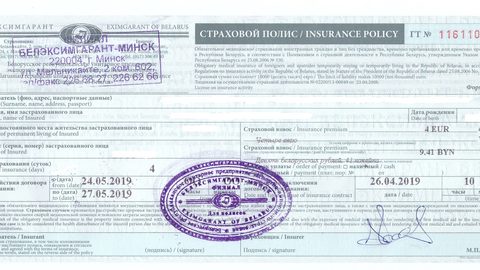 Schengen Travel Insurance Rules for Visas and Smart Trips
A hard requirement for Schengen visa applicants, and a good idea for everyone else crossing multiple borders.
-
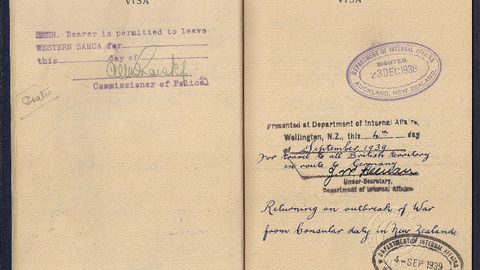 Overstaying the Schengen 90-Day Rule and What Happens Next
What actually happens when you overstay the Schengen 90/180-day limit, from fines to entry bans and future visa trouble.
-
 Extending a Schengen Stay Beyond 90 Days and What Actually Works
Extending a Schengen stay beyond 90 days is almost never possible. Here are the bilateral agreements and national visa routes that actually work.
-
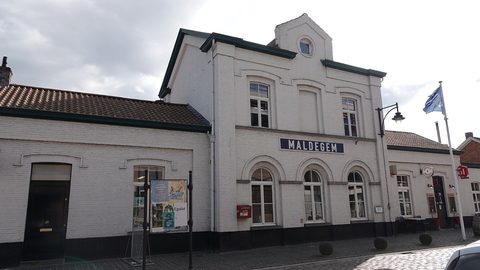 Planning a First Multi-Country Schengen Trip Without Burning Out
Planning a first multi-country Schengen trip starts with picking one region and three bases, not a dozen cities. Here is the order to plan in.
-
 A Two-Week Schengen Phone Checklist for a Four-Country Trip
Plan a two-week, four-country Schengen trip with phone checks for EU roaming, data limits, border switching, offline documents, and emergency calls.
-
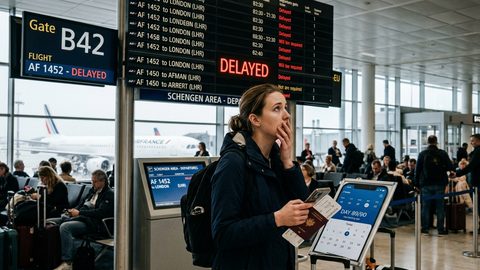 Flight Delays and Schengen Overstay Risk Under the 90-Day Rule
A flight delay on day 89 or 90 inside Schengen can tip you into overstay. Know your rights, your documentation, and exactly what to do.
-
 SIM Cards, eSIMs, and Roaming Costs for Schengen Multi-Country Travel
Non-EU visitors face real connectivity costs across Schengen. Compare home roaming, local SIMs, and regional eSIM plans before you pack.