Lost Passport During a Schengen Trip What to Do Next
A practical guide to Lost Passport During a Schengen Trip What to Do Next.

What to do the moment you realise your passport is missing
Stop moving. Stay exactly where you are, or return immediately to the last place you remember having the document. A lost passport inside a Schengen country is recoverable through a clear administrative process, but only if you act methodically from the start. Check every pocket, bag compartment and surface around you. Ask at nearby lost-property offices, hotel reception desks and transport information counters. If the passport was stolen rather than misplaced, do not confront anyone or put yourself at risk.
Once you are certain the passport is gone, your next step is the local police. You need a written police report. This document serves two purposes that matter later: it is typically required by your consulate before they will issue any replacement travel document, and it is typically required by your travel insurer before they will process a claim. Go to the nearest station in person. Provide the details calmly and ask for a copy of the report before you leave. Keep that paper safe. You will hand it over more than once in the days ahead.
Contacting your consulate or embassy
Your first port of call after the police is your own country's consulate or embassy. This is the institution that can issue you a replacement travel document, and no airline or border authority will accept a police report as a substitute for one. If your home country has a diplomatic mission in the city where you are stranded, go there directly. If it does not, you still have options. EU citizens who lose a passport in a country outside the EU where their own Member State has no embassy or consulate have the right to seek consular protection from any other EU Member State's embassy or consulate. This right extends to obtaining an emergency travel document.
When you reach the consulate, you will need to complete an application form, provide any available means of identification you still possess, and have a photo taken on site. An identity card or driving licence can help establish who you are, but do not panic if you have lost everything. The consular staff will verify your nationality and identity through their own channels. The process takes time because that verification happens between the assisting Member State and your own Member State of nationality. In normal cases, issuance should not take longer than seven working days. Plan your accommodation and finances around that window.
The EU Emergency Travel Document
As of 9 December 2025, EU Member States issue a standardised EU Emergency Travel Document to citizens whose passport has been lost, stolen, destroyed or cannot be obtained within a reasonable time. This is the document you are most likely to receive. It is valid for a single journey to your EU Member State of nationality or residence. Exceptionally, it may be issued for another destination, such as a neighbouring country where your own country's embassy is located. Its validity normally does not exceed 15 calendar days, so you cannot use it for onward tourism or a multi-stop return. You go home, directly and promptly.
The fee for this document is not fixed at an EU level. Each issuing Member State charges the same fee it charges its own nationals for national emergency documents. Because the amount varies, you must confirm the exact fee with the specific embassy or consulate handling your application. Ask about the cost and accepted payment methods during your first contact. Do not assume a card will work or that the fee is nominal.
What happens to your old passport
Once you report a passport as lost or stolen to the police or to your consulate, it is cancelled. Border authorities across the Schengen Area record that cancellation in their databases. This has a hard consequence: even if you later recover the document, you must not use it for travel. A cancelled passport will flag at any checkpoint and create a situation far worse than the one you are already managing. If you find the passport after reporting it, hand it in to the consulate or police. Do not be tempted to keep it as a backup.
Travelling without a passport inside the Schengen Area
The Schengen Borders Code states that internal borders may be crossed at any point without a border check on persons, irrespective of nationality. This is the rule that normally lets you move between Schengen countries without showing a passport. However, Schengen countries may temporarily reintroduce border controls at internal borders as a measure of last resort in the event of a serious threat to public policy or internal security. When such controls are active, travellers must present a valid passport or ID card.
This creates a risk for someone travelling without a passport. You might be able to move between Schengen countries by land without being checked, but you cannot rely on that. If temporary controls are in force along your intended route, you will be asked for a document you do not have. Before you attempt any cross-border journey without a passport, verify whether temporary border controls are currently active. The European Commission publishes this information. Make your decision based on what is officially in force, not on assumptions about how borders normally work.
Boarding a flight without your passport
Crossing a border by land without a passport carries one set of risks. Boarding an international flight without one is a different problem entirely. Airlines generally require a valid temporary passport or emergency travel document issued by your country's embassy or consulate to allow boarding. A police report will not get you past the gate. Neither will a photocopy of your lost passport, a driving licence or an identity card alone.
Individual airline policies on alternative identification vary. You must check with your specific carrier before travelling. Contact the airline through their official help centre or website and explain your situation. Ask explicitly what documents they will accept for boarding on your booked route. Do not rely on advice from fellow travellers or online forums. The only answer that matters is the one from the company that holds your ticket.
A practical order of operations
When the shock of a lost passport hits, having a sequence to follow removes the burden of deciding what matters next. Here is a recommended order, drawn from the obligations and rights described above.
First, search thoroughly and retrace your steps. Second, file a police report and obtain a written copy. Third, contact your consulate or, if none is available, the consulate of another EU Member State. Fourth, apply for an EU Emergency Travel Document and provide whatever identification you still hold. Fifth, confirm the fee and payment method with the issuing consulate. Sixth, verify whether temporary border controls are active on your intended route home. Seventh, check your airline's specific document requirements before heading to the airport. Eighth, once the emergency travel document is in your hands, travel directly to your destination without detours. The document is single-journey and short-validity. Use it as intended and get home.
What EU countries decide individually
Several aspects of this situation are not governed by EU-wide rules. There are no EU-wide rules on travelling without a valid travel document. Each EU country decides whether and when it allows EU citizens to enter or exit its territory without one. This means that even with a police report and a consular appointment in progress, you have no automatic right to cross a border. The decision rests with the national authorities of the country whose border you are attempting to cross.
Similarly, the fee for an emergency travel document is a national decision, and the availability of temporary border controls is a national decision taken under the Schengen Borders Code. When you are stranded without a passport, you are navigating a patchwork of national choices within a shared framework. The framework gives you rights, but the specifics vary. Ask each authority directly. Do not assume consistency between neighbouring countries.
Sources and verification
- home-affairs.ec.europa.eu — Research source checked for this guide
- eur-lex.europa.eu — Research source checked for this guide
- europa.eu — Research source checked for this guide
- commission.europa.eu — Research source checked for this guide
- eeas.europa.eu — Research source checked for this guide
- ireland.ie — Research source checked for this guide
Read next
-
 Temporary Schengen Border Checks and What Changes for Rail Trips
A practical guide to Temporary Schengen Border Checks and What Changes for Rail Trips.
-
 Schengen Member Countries and the Ones People Get Wrong
Which countries are in the Schengen Area, the ones people get wrong, and the difference between Schengen and EU membership.
-
 Schengen Border Checks and When Invisible Borders Return
The borders that are supposed to be invisible, and when temporary checks, police stops, and document demands return.
-
 Schengen Travel Insurance Rules for Visas and Smart Trips
A hard requirement for Schengen visa applicants, and a good idea for everyone else crossing multiple borders.
-
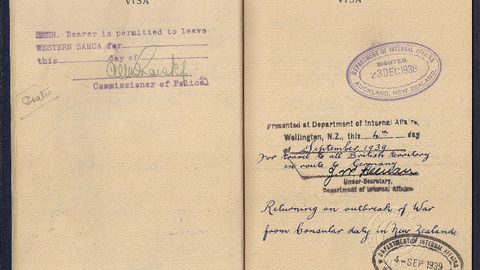 Overstaying the Schengen 90-Day Rule and What Happens Next
What actually happens when you overstay the Schengen 90/180-day limit, from fines to entry bans and future visa trouble.
-
 Extending a Schengen Stay Beyond 90 Days and What Actually Works
Extending a Schengen stay beyond 90 days is almost never possible. Here are the bilateral agreements and national visa routes that actually work.
-
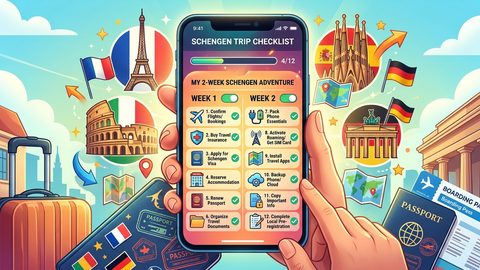 A Two-Week Schengen Phone Checklist for a Four-Country Trip
Plan a two-week, four-country Schengen trip with phone checks for EU roaming, data limits, border switching, offline documents, and emergency calls.
-
 Flight Delays and Schengen Overstay Risk Under the 90-Day Rule
A flight delay on day 89 or 90 inside Schengen can tip you into overstay. Know your rights, your documentation, and exactly what to do.
-
 SIM Cards, eSIMs, and Roaming Costs for Schengen Multi-Country Travel
Non-EU visitors face real connectivity costs across Schengen. Compare home roaming, local SIMs, and regional eSIM plans before you pack.