Prescription Medicine Across Schengen Borders Documents and Limits
A practical guide to Prescription Medicine Across Schengen Borders Documents and Limits.

What the Schengen medicine rules actually cover
The Schengen Area lets people move between 29 European countries without routine border checks, but that freedom does not extend to every item in your luggage. Prescription medicines sit in a tightly regulated middle ground. Most common drugs travel with you under a simple set of expectations. A smaller group, classified as narcotics or psychotropic substances, requires a specific certificate before you cross any internal Schengen border. Getting the distinction right before you pack determines whether your journey proceeds smoothly or stalls at a control point you did not expect.
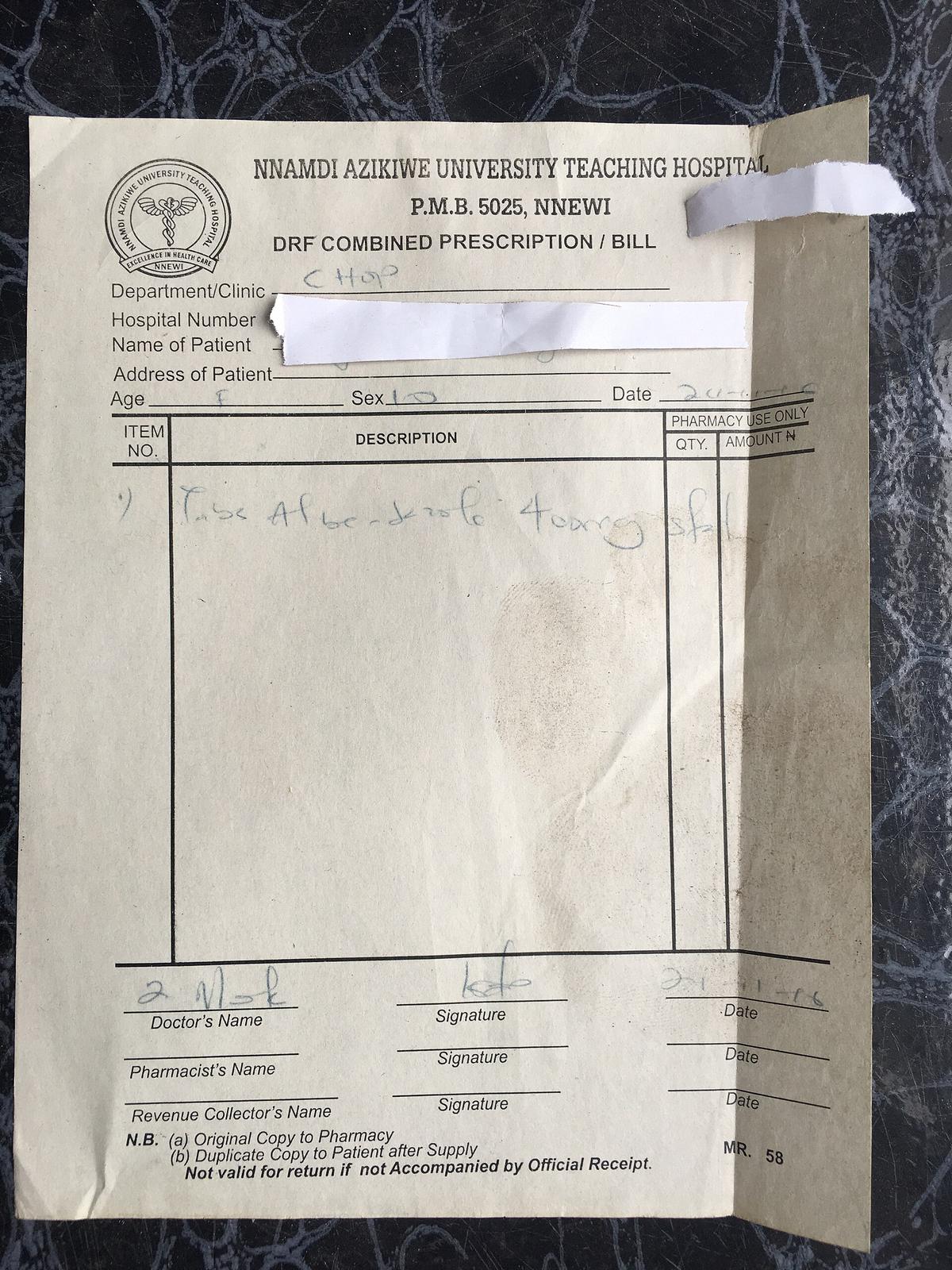
The core principle is straightforward. Travellers may carry prescription and over-the-counter medicines for personal use within the Schengen Area, provided the medicines stay in their original packaging and the traveller carries supporting documentation such as a signed copy of the prescription in English. This covers the majority of routine medications for chronic conditions, short-term antibiotics, antihistamines and similar treatments. The obligation to carry original packaging and a prescription copy is not a suggestion. It is the documented baseline that customs and police officers across Schengen states expect to see if they ask about your pills.
When a Schengen certificate becomes mandatory
The dividing line is pharmacological. A Schengen certificate, formally called an Article 75 certificate, is legally required when carrying medicines classified as narcotics or psychotropic substances. These are primarily drugs that affect the central nervous system. The category includes many strong painkillers, certain anti-anxiety medications, some sleep aids, and specific treatments for attention-deficit disorders. The exact list of which medicines fall under this rule is not uniform across all Schengen countries. Classification as a narcotic or psychotropic substance varies by national law, so a drug prescribed routinely in one member state may be controlled in another.
This is where the traveller must take an active step. You cannot assume your medicine is exempt just because your doctor prescribed it without comment. The only reliable method is to verify with your own pharmacy or national medicines agency whether your specific medicine requires a Schengen certificate. Do this early. The certificate process takes time, and discovering the requirement two days before a flight leaves you with few good options.
How the certificate works and what it limits
The Schengen certificate is not an open-ended travel document. It is valid for a maximum of 30 days from the date of issue, and the quantity of narcotic or psychotropic medicine you carry must not exceed a 30-day treatment supply. If your journey spans more than 30 days, you will need multiple successive certificates. A separate certificate is also required for each individual narcotic or psychotropic drug prescribed. You cannot combine several controlled medicines onto a single form.
There is a geographic limit too. A single Schengen certificate is valid for travel in up to four Schengen countries. If your itinerary passes through more than four Schengen states, you must obtain additional certificates to cover the extra destinations. This rule catches travellers on multi-stop rail itineraries or road trips that cross several borders in quick succession. Count your countries carefully when planning the paperwork.
The application process depends on where you live
The Schengen certificate must be issued or authenticated by the competent authority of the traveller's country of residence. There is no single European office that handles this. The issuing body varies by country. In Finland, Estonia and Sweden, pharmacies handle the process. In the Netherlands, the Central Administrative Office, known as the CAK, is responsible. In Germany, the supreme health authority of the relevant federal state, or Land, authenticates the certificate.
Because the authority differs, the procedure, fee and processing time also differ. In the Netherlands, the traveller downloads and completes the form, has it signed and stamped by their doctor, then submits it to the CAK for authentication. The CAK recommends submitting at least one week before departure and returns the approved certificate by email. In Germany, the treating physician completes the form, and the competent health authority of the traveller's place of residence then authenticates, or notarises, it before the journey begins. A fee applies, and the amount varies by federal state. As an editorial recommendation, begin the certificate process at least three weeks before travel if your country's published timeline is unclear. This gives you room to correct errors, chase missing stamps, or switch to a backup plan if the issuing office is backlogged. Always confirm the current procedure, fee and processing time directly with your national issuing body, because these details can change.
Transit, stopovers and the Ireland exception
A common misunderstanding is that the certificate requirement applies only when you formally enter a country. It does not. The Schengen certificate requirement also applies when merely transiting through or changing flights in a Schengen country's airport, even if you never leave the airside zone. If your controlled medicine is in your hand luggage during a connection in Frankfurt, Amsterdam or Zurich, the certificate must be with you.
Ireland adds a further layer. Ireland is not a full member of the Schengen Area and maintains its own border controls. Since 1 April 2023, Schengen Area residents entering Ireland must hold an Article 75 Schengen Certificate for prescribed medicines containing Schedule II or Schedule III controlled drugs under Ireland's Misuse of Drugs Regulations 2017. Prescribed cannabis-based products are not permitted, regardless of their legal status in the traveller's home country. This rule applies even if you are travelling from a Schengen state where your medicine is fully legal and routinely prescribed.
Quantity limits for non-narcotic medicines
For prescription medicines that do not fall under narcotic or psychotropic classification, the quantity rules are more generous but still bounded. Travellers within the European Economic Area, which includes all Schengen countries plus some others, may generally carry up to a one-year supply for personal use. When travelling from outside the EEA, the limit typically drops to a three-month supply. These are upper thresholds. Carrying more than a reasonable personal-use quantity, even within the stated limits, can still raise questions at customs. The original packaging and prescription copy remain essential supporting evidence.
Before relying on these limits, check the destination country's stance on your specific substance. Some medicines legally prescribed in one Schengen country may be banned or differently classified in another. The responsible authority to consult is the destination country's customs authority or embassy. This step is especially important for medicines that sit near the boundary between standard prescription drugs and controlled substances, where national interpretations diverge.
A practical packing and planning sequence
Start by listing every medicine you intend to carry, including those you might need only occasionally during the trip. For each one, ask your pharmacist or national medicines agency whether it is classified as a narcotic or psychotropic substance requiring a Schengen certificate. If the answer is yes, identify the issuing authority in your country of residence and begin the application. Count the Schengen countries on your itinerary. If the number exceeds four, plan for multiple certificates. If your trip exceeds 30 days, plan for successive certificates that cover the full treatment period in blocks.
Pack all medicines in their original packaging with pharmacy labels intact. Place the signed prescription copy and any Schengen certificates in an accessible part of your hand luggage, not buried in a checked bag. If your journey includes a flight connection in a Schengen airport, treat that stop exactly as you would a destination entry. The certificate must travel with you through the transit zone. For Ireland, verify the Schedule classification of your medicine under Irish law separately, because the Irish rules apply a distinct national framework that does not automatically align with Schengen classifications.
Sources and verification
- home-affairs.ec.europa.eu — Research source checked for this guide
- consilium.europa.eu — Research source checked for this guide
- eu-healthcare.fi — Research source checked for this guide
- fimea.fi — Research source checked for this guide
- incb.org — Research source checked for this guide
- gov.ie — Research source checked for this guide
Read next
-
 Lost Passport During a Schengen Trip What to Do Next
A practical guide to Lost Passport During a Schengen Trip What to Do Next.
-
 Temporary Schengen Border Checks and What Changes for Rail Trips
A practical guide to Temporary Schengen Border Checks and What Changes for Rail Trips.
-
 Schengen Member Countries and the Ones People Get Wrong
Which countries are in the Schengen Area, the ones people get wrong, and the difference between Schengen and EU membership.
-
 Schengen Border Checks and When Invisible Borders Return
The borders that are supposed to be invisible, and when temporary checks, police stops, and document demands return.
-
 Schengen Travel Insurance Rules for Visas and Smart Trips
A hard requirement for Schengen visa applicants, and a good idea for everyone else crossing multiple borders.
-
 Overstaying the Schengen 90-Day Rule and What Happens Next
What actually happens when you overstay the Schengen 90/180-day limit, from fines to entry bans and future visa trouble.
-
 A Two-Week Schengen Phone Checklist for a Four-Country Trip
Plan a two-week, four-country Schengen trip with phone checks for EU roaming, data limits, border switching, offline documents, and emergency calls.
-
 Flight Delays and Schengen Overstay Risk Under the 90-Day Rule
A flight delay on day 89 or 90 inside Schengen can tip you into overstay. Know your rights, your documentation, and exactly what to do.
-
 SIM Cards, eSIMs, and Roaming Costs for Schengen Multi-Country Travel
Non-EU visitors face real connectivity costs across Schengen. Compare home roaming, local SIMs, and regional eSIM plans before you pack.